With war on the horizon in Europe and only a small standing Army, Congress enacted the draft and
federalized the National Guard. With thousands of men being drafted, sixteen training camps for the
National Army and a like amount for the National Guard were constructed. In addition, other facilities,
depots, airfields and staging areas would be needed. Modernization of existing Army forts would also take
place. With construction underway, the Quartermaster Corps soon realized the great danger from fire in
the hundreds of wooden buildings and made provisions for camp fire departments. Fire stations were
constructed in troop housing areas, warehouse storage areas and at the camp hospital. The stations were
one story, had single or double bays with living quarters for the firefighters located to the rear of the
building.
The Army established two types of military fire fighting companies to provide fire protection at its
installations during the war. " Fire Truck and Hose Companies" were formed at National Army and National
Guard cantonments and other important facilities. The soldiers of these companies had but one duty, to
man the fire stations and fire apparatus at the cantonments. "Guard and Fire Companies" were
established at smaller Army installations, depots and storage areas. These units provided both fire
protection and security at the facility.
At most camps, a civilian fire department was formed to provide fire protection during the construction of
the installation. Fire apparatus used by this department was often purchased from nearby fire departments
or apparatus that had already been delivered to the camp by the QMC. Once the fire stations were built
and the camp fire department organized, the civilian department was disbanded. In many cases, the
civilian fire chief during construction was offered a commission in the Army to stay on and head the
operation of the camp fire department. At Camp Upton, NY, a battalion chief, loaned by the City of New
York, was commissioned and made Camp Fire Chief. He directed a force of forty-two soldiers, all former
New York City firefighters.
federalized the National Guard. With thousands of men being drafted, sixteen training camps for the
National Army and a like amount for the National Guard were constructed. In addition, other facilities,
depots, airfields and staging areas would be needed. Modernization of existing Army forts would also take
place. With construction underway, the Quartermaster Corps soon realized the great danger from fire in
the hundreds of wooden buildings and made provisions for camp fire departments. Fire stations were
constructed in troop housing areas, warehouse storage areas and at the camp hospital. The stations were
one story, had single or double bays with living quarters for the firefighters located to the rear of the
building.
The Army established two types of military fire fighting companies to provide fire protection at its
installations during the war. " Fire Truck and Hose Companies" were formed at National Army and National
Guard cantonments and other important facilities. The soldiers of these companies had but one duty, to
man the fire stations and fire apparatus at the cantonments. "Guard and Fire Companies" were
established at smaller Army installations, depots and storage areas. These units provided both fire
protection and security at the facility.
At most camps, a civilian fire department was formed to provide fire protection during the construction of
the installation. Fire apparatus used by this department was often purchased from nearby fire departments
or apparatus that had already been delivered to the camp by the QMC. Once the fire stations were built
and the camp fire department organized, the civilian department was disbanded. In many cases, the
civilian fire chief during construction was offered a commission in the Army to stay on and head the
operation of the camp fire department. At Camp Upton, NY, a battalion chief, loaned by the City of New
York, was commissioned and made Camp Fire Chief. He directed a force of forty-two soldiers, all former
New York City firefighters.
Organization of the camp fire department started with the appointment of a Fire Marshal by the Camp Commander. Fire
Marshals held the rank of Captain or 1st Lieutenant. Officers with some background in firefighting were often chosen to head
the camp fire department. Firefighters were drafted from units within the camp and assigned to the department. As with Fire
Marshals, doughboys with experience in big city fire departments were chosen to help fill the ranks. A Sergeant First Class
was in charge of each fire station with a Private First Class acting as driver of the equipment. Army privates made up the
force of firefighters.
Marshals held the rank of Captain or 1st Lieutenant. Officers with some background in firefighting were often chosen to head
the camp fire department. Firefighters were drafted from units within the camp and assigned to the department. As with Fire
Marshals, doughboys with experience in big city fire departments were chosen to help fill the ranks. A Sergeant First Class
was in charge of each fire station with a Private First Class acting as driver of the equipment. Army privates made up the
force of firefighters.
The Quartermaster Corps was in charge of purchasing fire apparatus used by the US Army during WWI. Equipment was
produced by several manufactures. American LaFrance delivered over 200 fire engines of several types and Howe produced
over 160 fire trucks built on the Ford Model T chassis. Ahrens-Fox delivered some 18 rigs for the war effort and Seagrave
produced 12. White and Brockway also delivered rigs to the Army. Some fire equipment used by camp fire departments was
homebuilt. Fort Meade had on it's roster an Indian motorcycle with sidecar. During the war some camps had horse drawn
fire equipment on their rosters.
produced by several manufactures. American LaFrance delivered over 200 fire engines of several types and Howe produced
over 160 fire trucks built on the Ford Model T chassis. Ahrens-Fox delivered some 18 rigs for the war effort and Seagrave
produced 12. White and Brockway also delivered rigs to the Army. Some fire equipment used by camp fire departments was
homebuilt. Fort Meade had on it's roster an Indian motorcycle with sidecar. During the war some camps had horse drawn
fire equipment on their rosters.
Many of the American LaFrance and Ford-Howe fire trucks saw service in France during the war. These rigs were manned
by Doughboy firefighters which were deployed from stateside camps. The Army also used fire engines that were procured
from French fire departments.
As a means of reporting fires at stateside camps, telephone call boxes were mounted on telephone poles throughout the
camp. These phones were tied directly to the Headquarters fire station where a watch was maintained 24 hours a day.
Automatic alarms from warehouse sprinkler systems also fed into fire headquarters. Many camps also maintained an alarm
system between fire stations for prompt dispatch of equipment.
When the war ended, the military firefighting companies were demobilized and the operation of the camp fire departments
came under the control of the Post Engineer at each facility. Civilian firefighters took the place of the military personnel at
many camps while others maintained combined crews of civilian and military. Some camps, such as Camp Meade
maintained military firefighters until the start of World War II.
by Doughboy firefighters which were deployed from stateside camps. The Army also used fire engines that were procured
from French fire departments.
As a means of reporting fires at stateside camps, telephone call boxes were mounted on telephone poles throughout the
camp. These phones were tied directly to the Headquarters fire station where a watch was maintained 24 hours a day.
Automatic alarms from warehouse sprinkler systems also fed into fire headquarters. Many camps also maintained an alarm
system between fire stations for prompt dispatch of equipment.
When the war ended, the military firefighting companies were demobilized and the operation of the camp fire departments
came under the control of the Post Engineer at each facility. Civilian firefighters took the place of the military personnel at
many camps while others maintained combined crews of civilian and military. Some camps, such as Camp Meade
maintained military firefighters until the start of World War II.


| Camp Pike, AK 1918 Ahrens-Fox 750 gpm AF Reg # 758 |
| Great photo of the Camp Knox Headquarters Fire Station Thanks to Jim for the photo. |
| One of the 1918 AmLaFr Type 40 pumpers delivered to the Army. This unit served in France during the war |

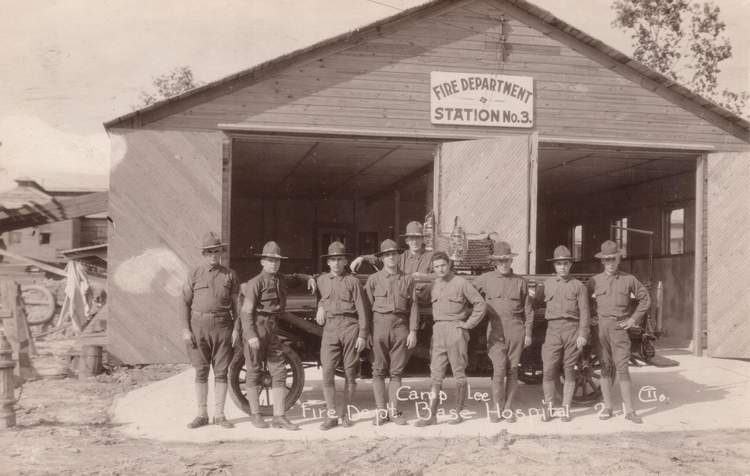

| Camp Lee, VA 1819 Ford-Buckeye at Base Hospital |
| Camp Mills, NY 1918 Dodge-Pirsch Chem Car & 1918 AmLaFr |
| Camp Custer, MI 1918 AmLaFr Type 75 pumper |
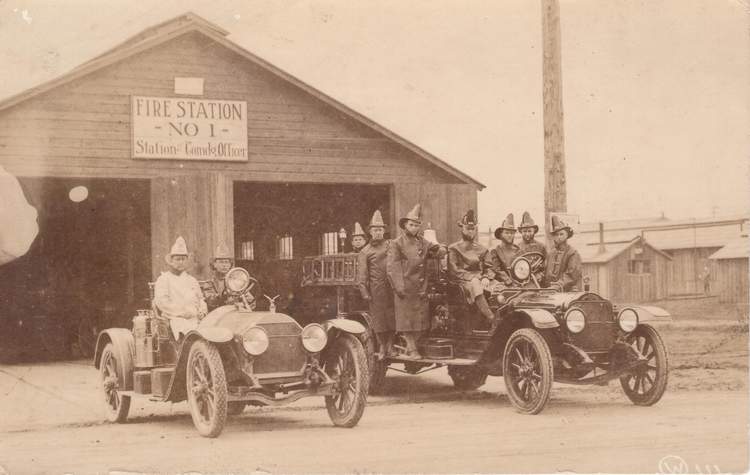


| Camp Funston, KS |
| 1918 Dodge-Pirsch Chemical Car used by the US Army during WWI |
| Camp Devens, Mass 1918 AmLaFr & 1918 Seagrave |


Two modified 1918 Dodge-Pirsch Chem Cars Camp Holabird, MD |
1917 Ford-Buckeye & 1918 AmLaFr Camp Lewis, WA |
| Camp Funston, KS 1917 Ford-Buckeye pumpers |


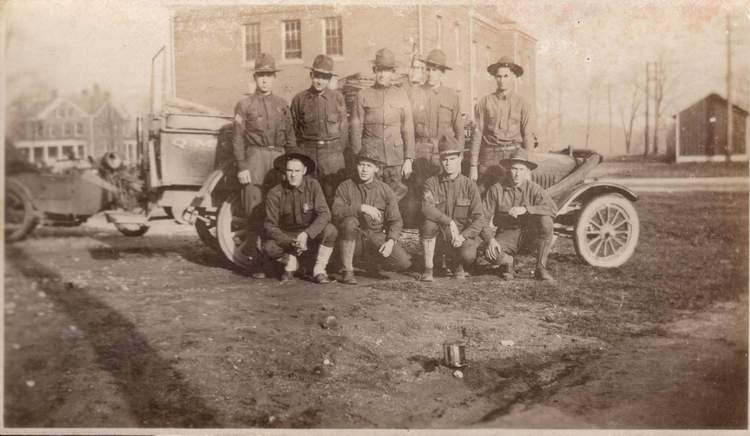
| WW I view of the Base Hospital Fire Station Camp Custer |
| 1917 Ford-Buckeye Fort Ben Harrison, IN |
| 1917 Ford-Buckeye, Camp Grant, IL |

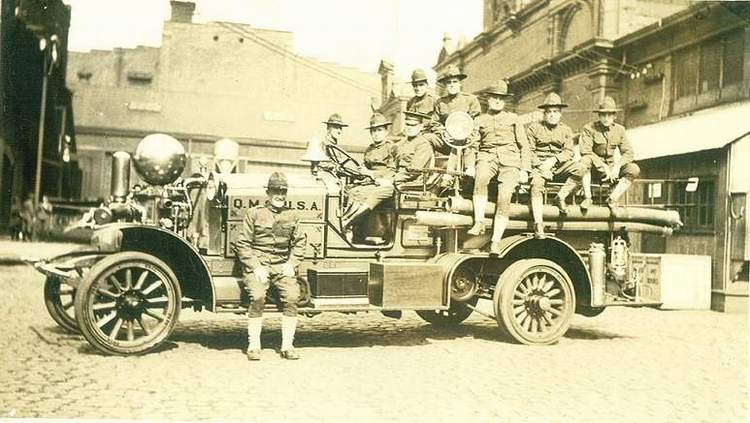

| Fort Meyer, VA, 1918 AmLaFr |
| 1918 Ahrens-Fox 750 gpm Model K-4. OReg. 671. Port of Embarkation, NJ |
| A pair of 1917 Ford-Buckeyes Camp Custer, MI |
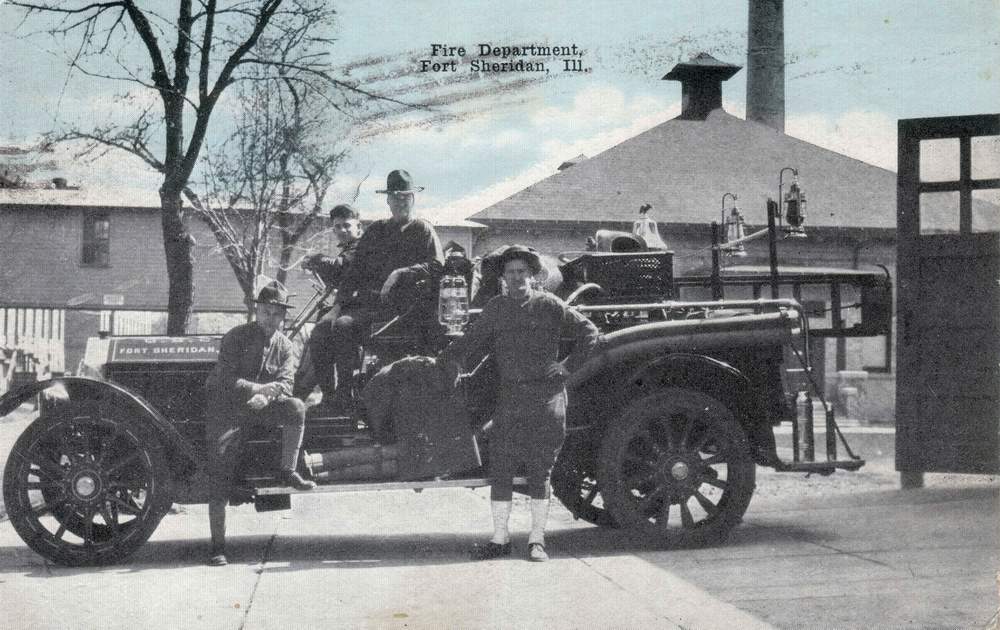

| 1918 AmLaFr, Fort Sheridan |
| 1917 Ford-Buckeyes, Camp Lee, VA |


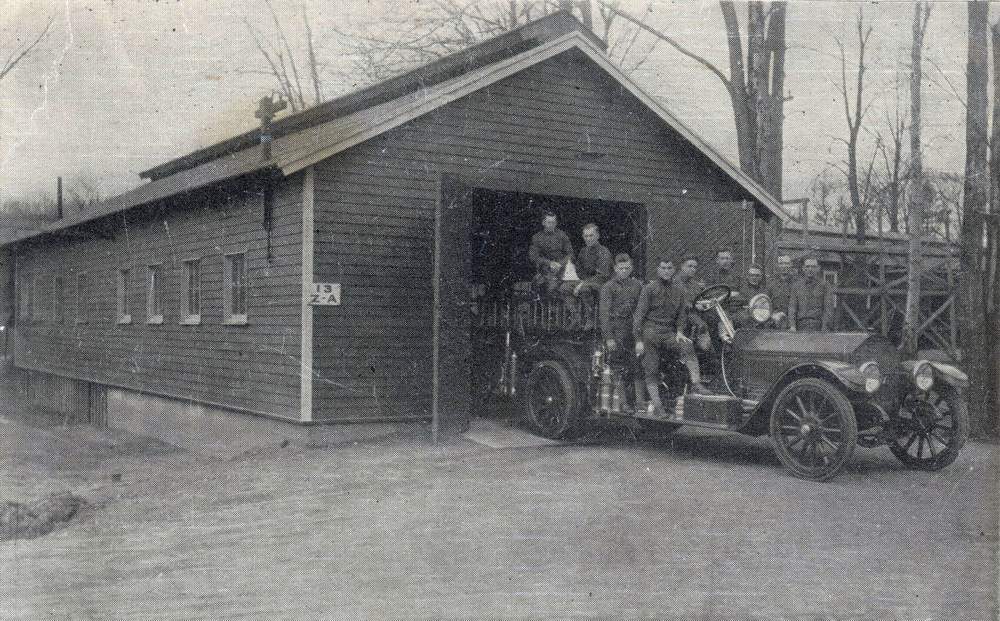
| 1918 AmLaFr Type 40, Camp Custer |
| Fire Department operated by the constructing contractor at Camp Custer, FT&HC 310 |
| 1918 AmLaFr Type 75, Base Hospitall Camp Merritt, NJ |


| Equipment lineup at Rock Island Arsenal 1919 |
| 1918 Ahrens-Fox and Dodge-Pirsch chemical wagon, Camp Sherman |
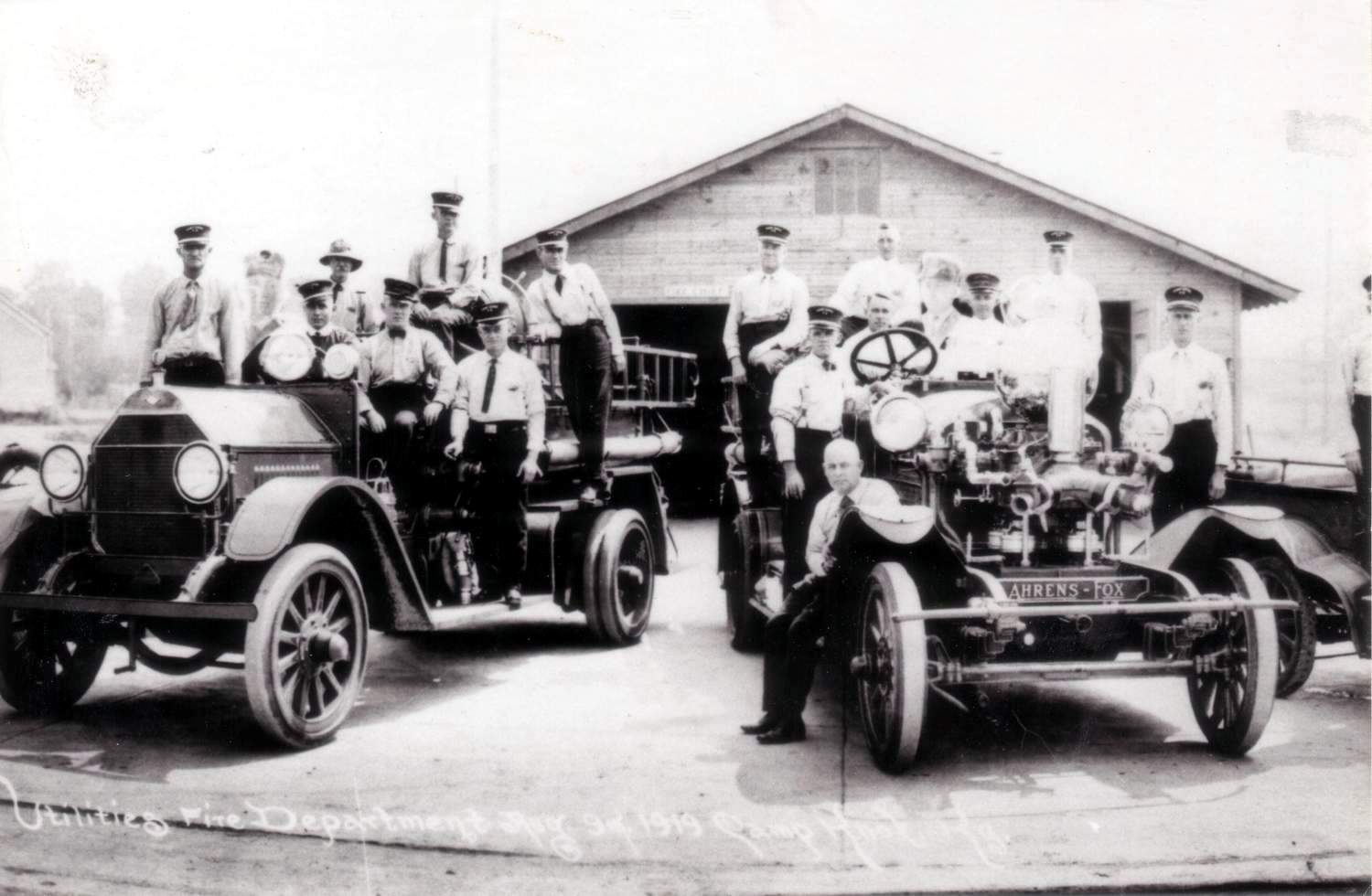


1918 Ahrens-Fox & 1917 South Bend pumper Camp Knox 1919 |
| 1918 AmLaFr Type 40 Reg 2377 Rig served at Camp Perry, OH Rig owned by John Lytle |


| 1917 Ford-Buckeye US Army, Tours, France Sept 1919 |
| 1918 Ahrens-Fox from Camp Taylor, KY Sent in by Steve Hagy |
| Pirsch hose wagon Rock Island Arsenal 1919 |

1917 Ford-Buckeyes at Camp Funston, KS

1917 Ford-Buckeye, Camp Upton, NY

| 1917 American LaFrance, Camp Dix, NJ Headquarters, Fire Station No. 1 |
| 1918 AmLaFr Type 75 pictured at Camp Eustis Thanks go out to Bobby for the photo |
| 1917 Ford-Buckeye & 1918 Brockway LaFrance Hospital Station Camp Sherman |

| 1917 American LaFrance Camp Dix, NJ Headquarters, Fire Station No. 1 Partial view as original photo measures 12x14 From the SMH Collection 2011 |
| ______________________________________________________________________________________ |
World War I


| The above photos were sent in by Jim Mauch and show the military firefighters and equipment at Camp Taylor, Fire Truck and Hose Company # 309. Jim's grandfather, Levi Ferguson was a member of the fire department at Camp Taylor and can be seen at the wheel of the 1917 Ford-Howe pictured directly above. That photo was taken in Nov 1917. Thank you Jim for sending in the photos. |

| Fort Sill, OK, 1920 |
| 1918 Robinson 600 gpm pumper for the US Quartermaster Corp. |
| Fire Department operated by the constructing contractor at Camp Devens before the 301st Fire Truck and Hose Company was organized. |
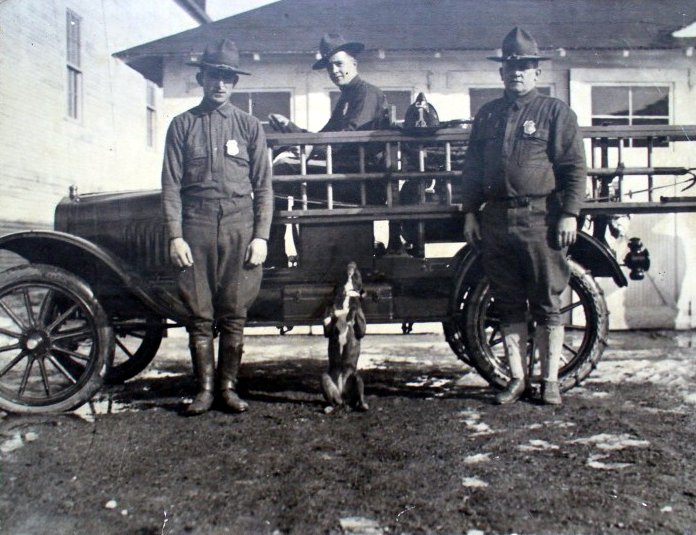
| 1917 Ford-American LaFrance Double Chemical Tank Chanute Field, IL |


| 1918 American LaFrance, Camp Dix, NJ Fire Station No.2 From the SMH Collection 2010 |
| 1918 American LaFrance Camp Dix Fire Station No. 3 From the SMH Collection 2010 |
| American LaFrance from Fire Station No. 2 Camp Dix From the SMH Collection 2010 |

 |
| |
 |
| |
 |
| |
 |
| |
 |
| |
 |
| |
 |
| |
 |
| |
 |
| |
 |
| |
 |
| |
 |
| |
 |
| |
 |
| |
 |
| |
 |
| |
 |
| |
 |
| |
 |
| |
 |

| 1917-18 Ford-Boyer Chemical & Hose Car |
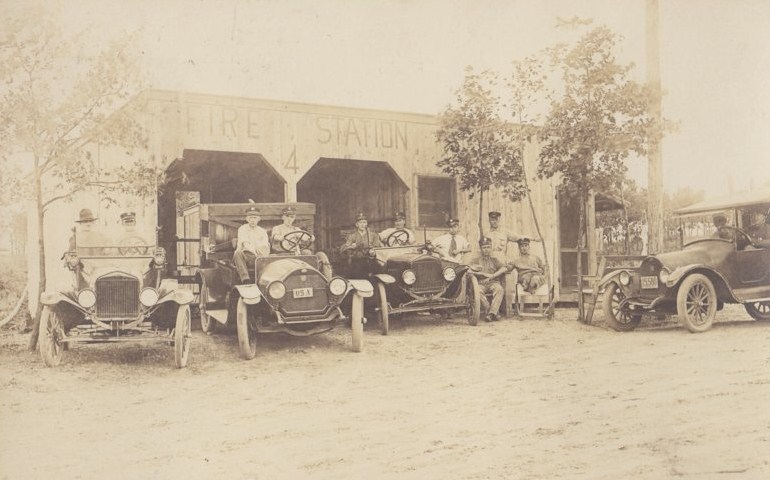


Fire Station #3 Camp Devens Dec 1918
| Constructing contracter fire department at unknown Army Camp using 1917 Ford-Buckeye QMC pumper. |


| Brockway-LaFrance Chemical & Hose Car Camp Dix Fire Station No. 5 1 May 1919 From the SMH Collection 2011 |

| 1918 Dodge-Pirsch Chemical Car Camp Dix Fire Station No. 4 From the SMH Collection 2011 |

| 1918 Seagrave Carlisle Barracks PA |

| Chanute Field Fire Station and Guard House, WWI |


| US Army Fort Logan, CO 1918 American LaFrance Type 40, USA 50561 4 April 1928 From the SMH Collection 2011 |
| US Quartermaster Corps Cairns High Eagle Leather Helmet World War I era From the SMH Collection 2011 |


| U.S. Army American LaFrance First Size Metroplitan Steamer 1904-1909 |
Wisconsin Historical Society Image WHi-74650
| Camp Travis Fire Station No. 3 White & Ford-Howe pumpers |


| Camp Upton, NY 1917 Ford-Buckeye Manned by draftes from the FDNY. |


| Fire Truck & Hose Company #319 Headquarters, Fire Station #2 Gievres, Loire et Cher, France 7 Jan 1919 |
| Camp Johnson, FL, WWI |
Fire Trucks at War