| FIRE TRUCKS AT WAR |
| US Army Fire Apparatus 1918 -1950 & US Army Engineer Fire Fighting Platoons of World War II |

| Damage to the Hickam Field fire station. Damaged apparatus include a 30's era Holabird and Seagrave. |

During the 1930s most fire equipment used at Army installations was constructed at the
Quartermaster Corps Motor Transport Shop at Camp Holabird, in Baltimore, Maryland. Scores of
pumpers and crash trucks were produced there and shipped to camps stateside and overseas.
The Quartermasters Corps had been responsible for all Army fire protection since the 1800s.
With war on the horizon, in 1939, the QMC started to plan for the Army's wartime firefighting
needs. New camps and post would be constructed and exsisting installations would be rebuilt and
enlarged. New arsenals, airfields, and related compunds would all require hugh numbers of new
fire apparatus. This demand for fire trucks far surpassed what the QM Depot at Camp Holabird
could produce. The Army turned to the nations fire apparatus manufacturers to supply this much
needed equipment.
Prior to the war the QMC developed a system for classifying it's fire apparatus with 4 general
classes of fire trucks.
In November 1941 the responsibility for Army fire protection was transferred to the Army Corps of
Engineers. The COE maintained the classification system of fire equipment and expanded on it as
new types of fire trucks were developed and placed in the field. Hundreds of contracts for fire
apparatus and fire fighting equipment were awarded to fire truck manufacturers.
By wars end the following classes of fire apparatus were being used.
Not all Army fire apparatus fell under the class system. Ladders trucks, and home built rigs were
not included.
Prior to WWII Army fire apparatus was painted red, but during the attack on Pearl Harbor those Red
fire trucks became good targets for the attaching Japanese planes. Fire trucks ordered after Dec
41 were painted OD.

| Badge worn by Pvt. Robert B. Harmon, Army Firefighter at Hickan Field during the attack by the Japanese, 7 Dec 1941. Photo sent in by his son Robert. |

World War II Camp Devens, MA
What started as a website devoted to the fire apparatus used by the US Army during World War II
has grown to include the brave Army Fire Fighters that served with the Army Engineer Fire Fighting
Platoons. You will also find information and photos of military fire fighters and equipment from WW
I, Korea and Vietnam. By request we have also included information and photos of WWII Navy and
1950s era US Air Force Fire Trucks.
The staff members of the FTAW website are not experts on any of the subjects posted, just some
folks interested in this previously undocumented aspect of both Military and American Fire Service
history.
has grown to include the brave Army Fire Fighters that served with the Army Engineer Fire Fighting
Platoons. You will also find information and photos of military fire fighters and equipment from WW
I, Korea and Vietnam. By request we have also included information and photos of WWII Navy and
1950s era US Air Force Fire Trucks.
The staff members of the FTAW website are not experts on any of the subjects posted, just some
folks interested in this previously undocumented aspect of both Military and American Fire Service
history.

 |
| |
 |
| |
 |
| |
 |
| |
 |
| |
 |
| |
 |
| |
 |
| |
 |
| |
 |
| |
 |
| |
 |
| |
 |
| |
 |
| |
 |
| |
 |
| |
 |
| |
 |
| |
 |
| |
 |

_____________________________________________________________________________________________
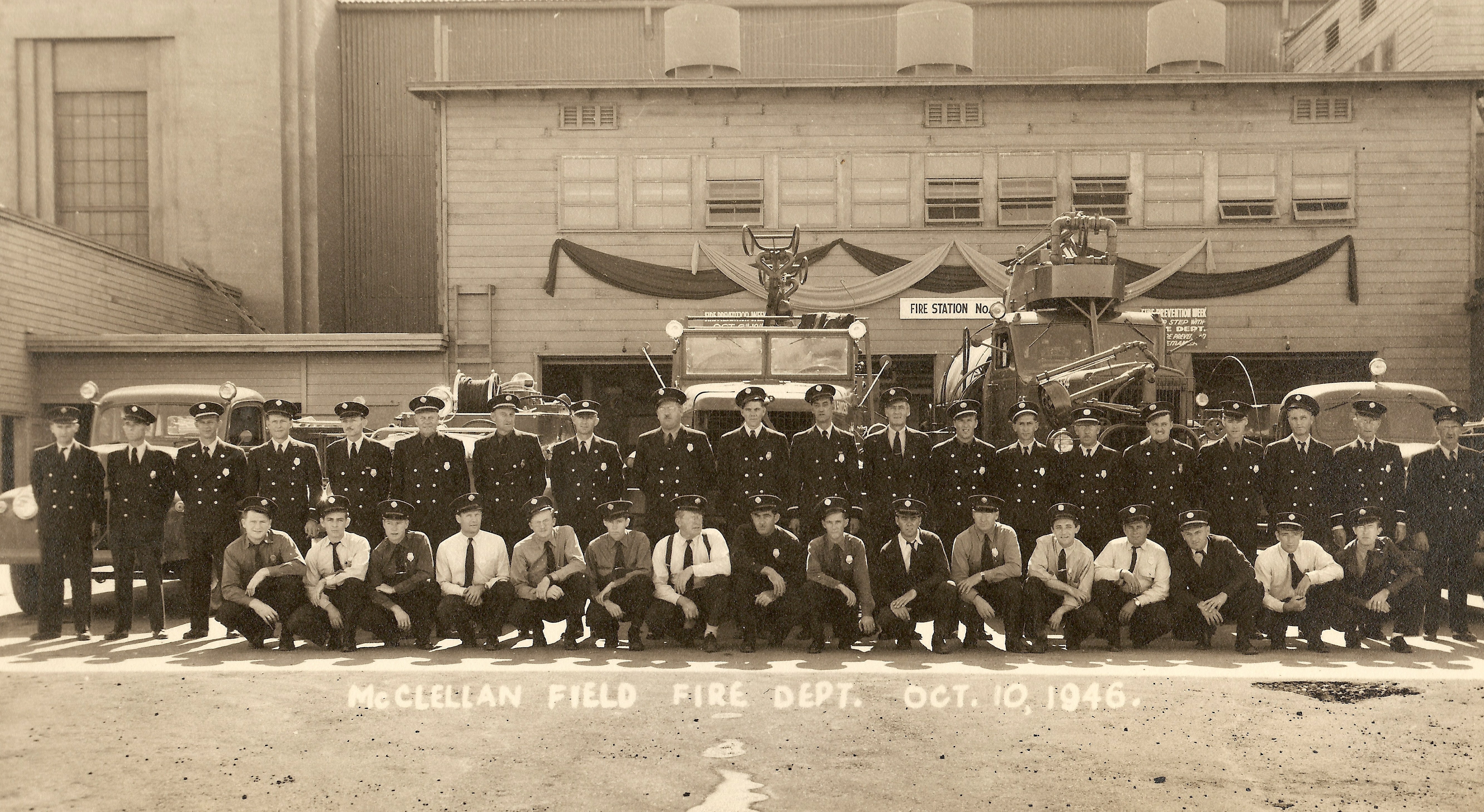
Fire Prevention Week at McClellan Field, CA 10 October 1946
| Fire Station # 1 |
| Fire Station # 5 |


| Fire Station # 4 |
| Fire Station # 3 |
_______________________________________________________________________________________________
CLICK PHOTOS TO ENLARGE IMAGE


| We would like to acknowlege our friend Nelson Dionne and thank him for his generous donation of pictures, books, magazines, Army TMs and other material to the FTAW archives. Nelson served as a Army firefighter in Germany and Thailand and has been doing research on the military fire service for a number of years. It was Nelson's article "History of Military Fire Fighting" which appeared in the Spring 1986 issue of "Army Motors" magazine that inspired this researcher many years ago. Nelson has done much to help other researchers in their quest to obtain information on the military fire service and fire apparatus. Thanks again Nelson |
| Our friend Nelson Dionne, bottom row, center, pictured with the Army fire department at Bad Aibling Station, Germany Truck is a Studebaker-Hesse Carriage Co. Class 530A |
_______________________________________________________________________________________________

| Not an offical site of the DOD or US Government. |
| US Army Fire Odds & Ends |
Links


_________________________________________________________________________
Class 100 Crash Trucks
Class 110 Crash Trucks
Class 125 Crash Trucks
Class 135 Crash Trucks
Class 150 Crash Trucks
Class 155 Crash Trucks
Class 300 Brush Trucks
Class 325 Brush/Structure
Class 335 Field Conversion
Class 500 Structure
Class 510 Structure
Class 525 Structure
Class 530 Overseas Pumper
Class 750 Structure
Class BF 750 Structure
Class 1000 Fire Fighting Trailers
Class 110 Crash Trucks
Class 125 Crash Trucks
Class 135 Crash Trucks
Class 150 Crash Trucks
Class 155 Crash Trucks
Class 300 Brush Trucks
Class 325 Brush/Structure
Class 335 Field Conversion
Class 500 Structure
Class 510 Structure
Class 525 Structure
Class 530 Overseas Pumper
Class 750 Structure
Class BF 750 Structure
Class 1000 Fire Fighting Trailers
1. Class 100 Crash Trucks
a. Standard Class 100
b. Standard Class 110
c. Standard Class 125
2. Class 300 Brush Trucks
a. Standard Class 300
b. Standard Class 325
3. Class 500 Structure Pumpers
a. Standard Class 500
b. Standard C;ass 510
c. Standard Class 525
4. Class 750 Pumpers
a. Standard Class 750
b. Standard Class BF 750
a. Standard Class 100
b. Standard Class 110
c. Standard Class 125
2. Class 300 Brush Trucks
a. Standard Class 300
b. Standard Class 325
3. Class 500 Structure Pumpers
a. Standard Class 500
b. Standard C;ass 510
c. Standard Class 525
4. Class 750 Pumpers
a. Standard Class 750
b. Standard Class BF 750



| Fire Station # 2 |
Preserving The Past For The Future
| If you have questions, photos or information regarding the US Military Fire Service post your material on our Facebook page. |